Everyone likes food – Notes about my cooking style and recipes on this site

Pretty much everyone likes food, right?  I know I do!  So far, I have barely scratched the surface of food and recipes on this blog.  But that is about to change.  I have gotten several requests to share food recipes and how food and meal prep fits into my frugal lifestyle.  You are in luck.  I love cooking and baking, and am excited to share my recipes and tips with you!


Disclaimer: This post contains affiliate links.  See my Disclosure Policy for more information.
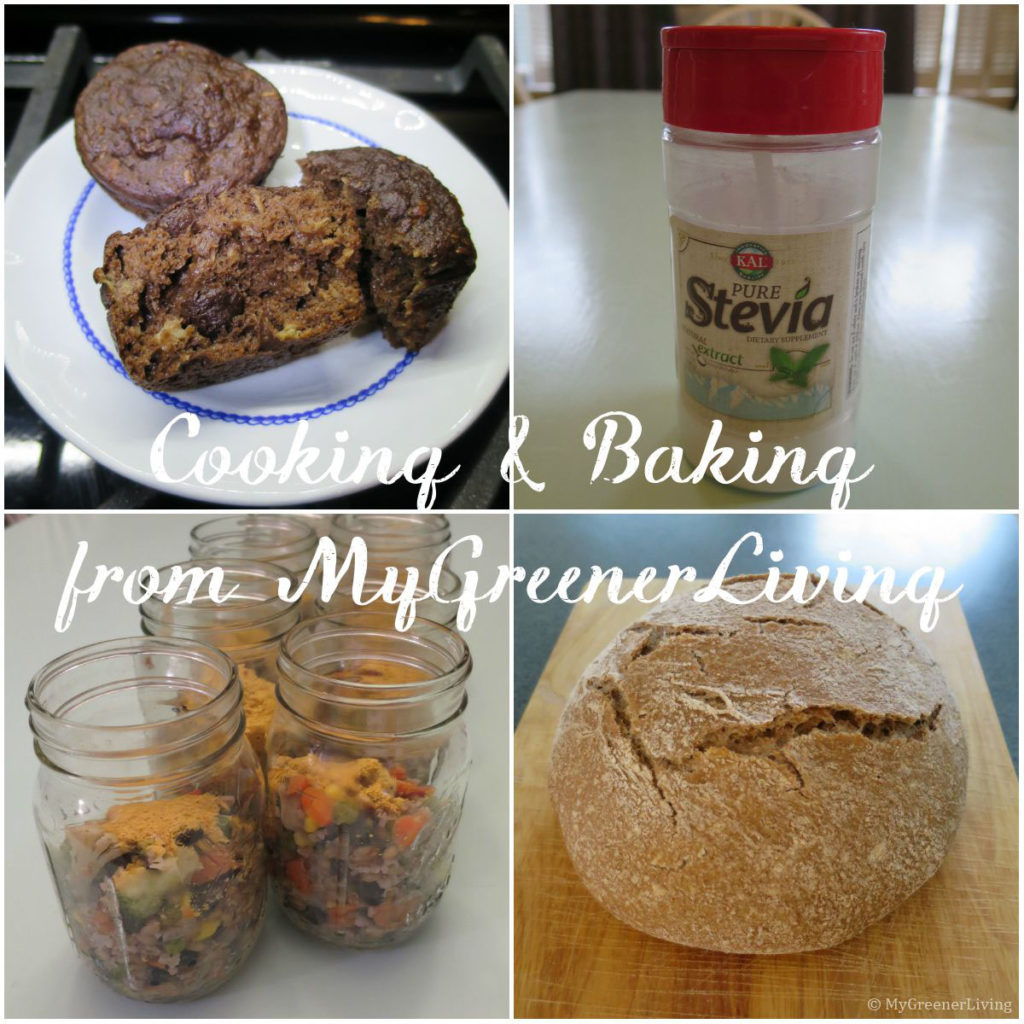

colloage cooking & baking from MyGreenerLiving. photos of chocolate banana bread, stevia, mixed grain and veggie casserole, sourdough bread

First, a few things about my cooking and baking:

Vegetarian cooking

I am a vegetarian, so most of my recipes will be vegetarian.  I am not vegan but often substitutions can be made in my vegetarian cooking recipes.  

Healthy baking

Is healthy baking even possible?  That is debatable.  Everyone has a different definition of “healthy,” so you will have to use your own discretion.  In my “healthy” baking, I aim to reduce or eliminate added sugars, avoid artificial sweeteners, add protein, and reduce what I consider “bad fats” (such as vegetable oils).
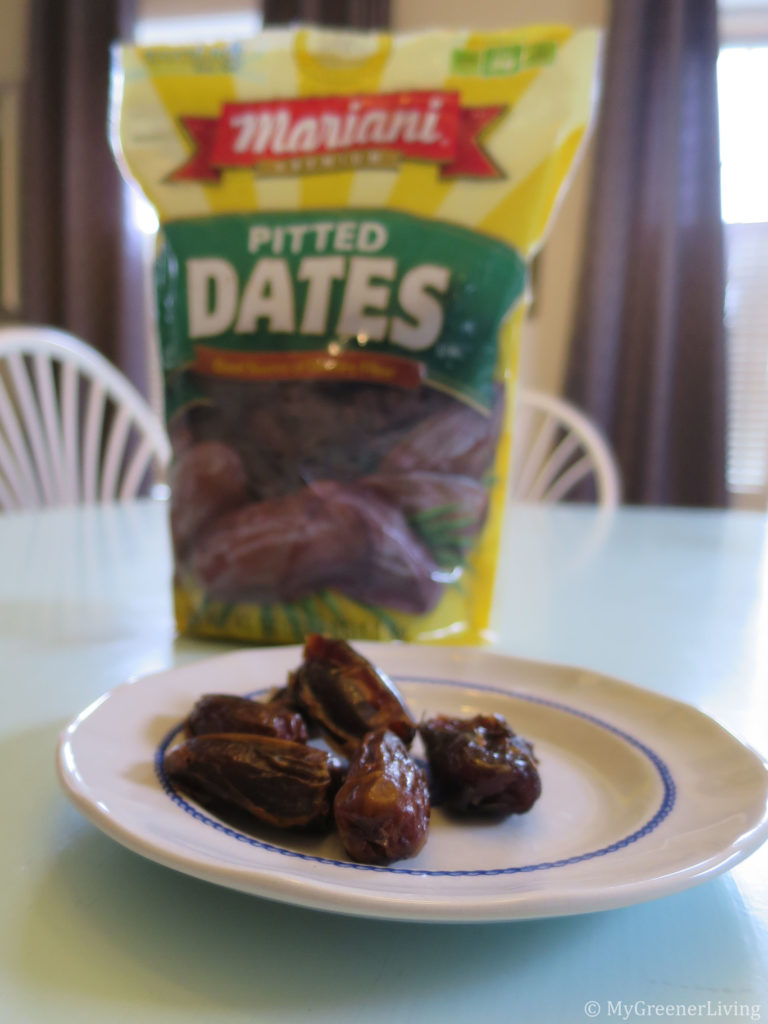
dried dates

I like to use pureed dates as a natural sweetener, and I often substitute about half of the sweetness in a recipe with stevia, a highly concentrated natural sweetener that comes from a plant.   This small container of Kal brand pure stevia extract powder and has lasted me about 3 years.  I typically remove about half the added sugar recommended in recipes, and replace with stevia.  For each cup of sugar removed, I add about 1/2 teaspoon of pure stevia extract powder.  That’s right:  I feel that the sweetness from 1 cup sugar = 1/2 TEASPOON pure stevia powder.  That’s how the tiny jar lasts so long for me!
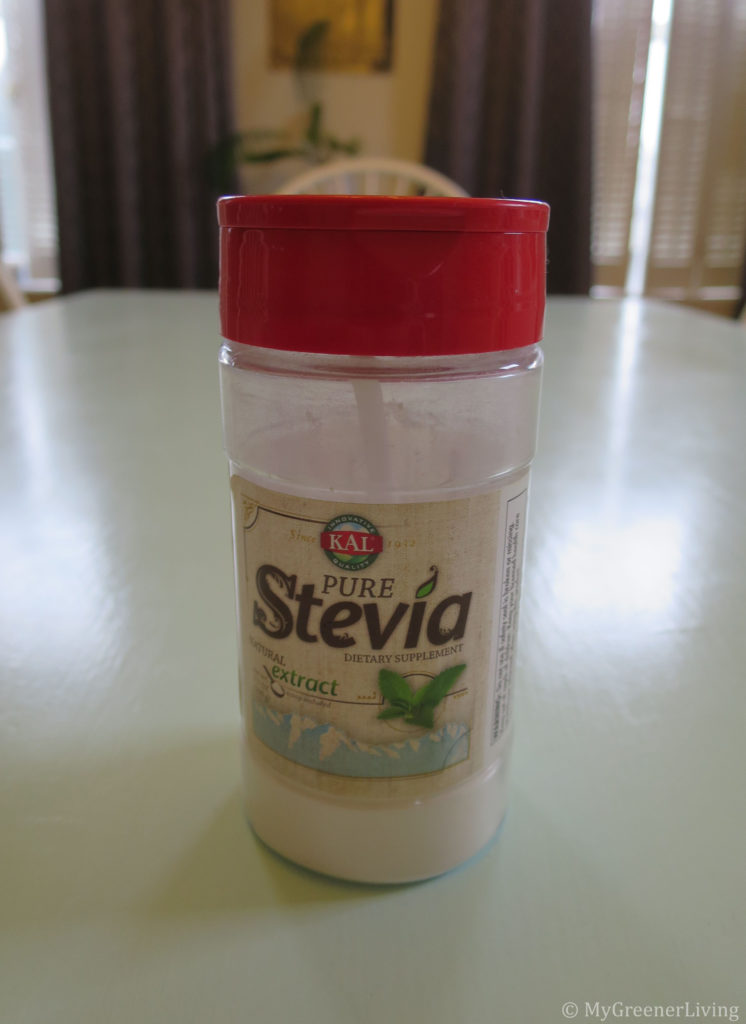
pure stevia powder container

Soaking nuts, seeds, and grains

I soak most of my nuts, seeds, and grains before consuming.  I follow a soaking process to reduce the amount of phytic acid in my foods.  Put simply, phytic acid is present in all seeds, grains, and nuts.  It makes it so our bodies cannot absorb all the great nutrients present in these foods.  This is particularly relevant to people who are iron deficient, and to vegetarians, since humans don’t produce enough of the enzyme needed to break down the phytic acid.  Basically, when I soak my seeds, nuts, and grains before eating them, it allows my body to get the most nutritional benefit from my food.  

Here’s the more scientific explanation.  Phytic acid is naturally present in seeds, grains, and nuts – foods that we eat that are the “seed” part of plants.  I think it’s a great adaptation that these plants have  evolved to protect themselves.  Phytic acid prevents the seed part of the plant from starting to grow until it is in the ground.  It also binds to nutrients like iron, zinc, manganese, and calcium, so when that seed does begin to germinate in the ground, it has the nutrients it needs to grow healthily.  This means our bodies can’t absorb all the great nutrients from the “seed” without the presence of phytase, an enzyme needed to break down phytic acid.  Soaking, sprouting and fermenting allows the enzyme phytase to break down some of the phytic acid, therefore reducing the amount of phytase that enters the body when these foods are eaten. 
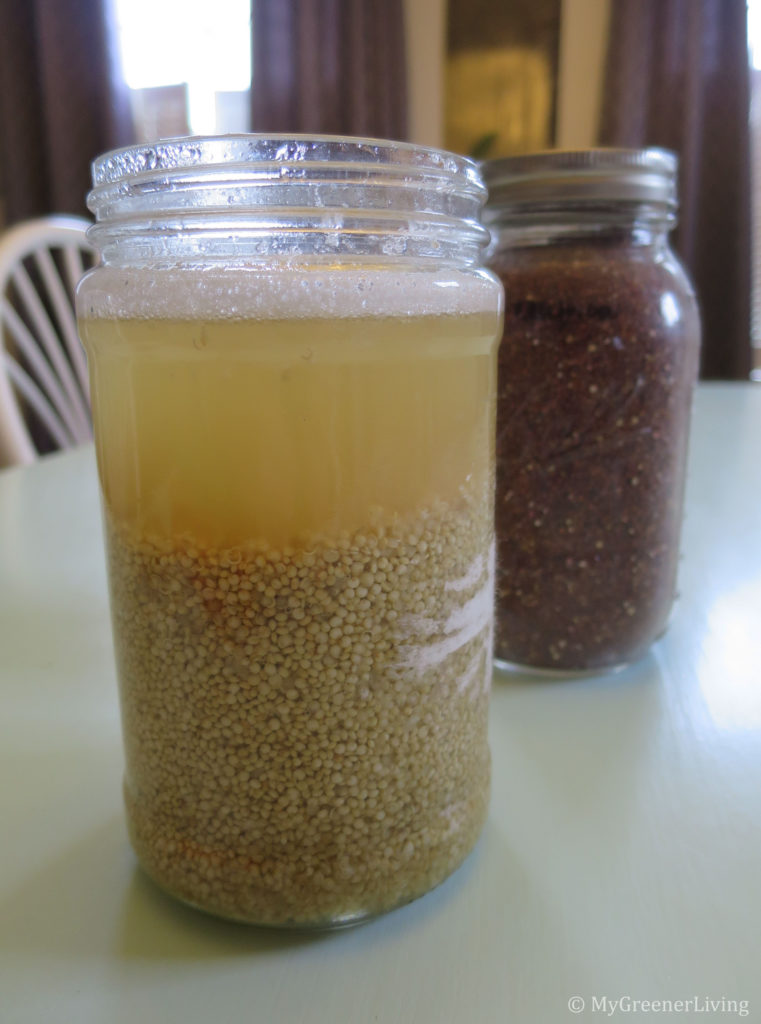
soaking quinoa

Important Note:

There are also benefits to phytic acid, so you should evaluate your own health and needs to determine if soaking grains, nuts, and seeds is something that you want to do. 

If I was NOT vegetarian, I probably would only soak the foods that I regularly eat without eating meat at the same time – like nuts/peanuts (for snacking and making peanut butter) and bread.  

For more information:

There are a lot of great articles and posts that explain more about phytic acid.  If you’re interested in learning more about this, I recommend reading the articles from the Weston A Price Foundation,  Precision Nutrition, and The Nourishing Home.  

This article from the Weston A. Price Foundation talks in depth about preparing foods for consumption with reduced phytic acid, and I use both this page and The Nourishing Home as references when I am soaking my nuts, seeds, and grains. 

Check back tomorrow for my first recipe: mixed grain and veggie casserole.

Do you have questions, requests, or tips relating to cooking or baking?  Please share in the comments below!

How and how often to wash sheets

Since writing my post about washing towels, I had been wanting to share what I had found about how I wash sheets.  Like towels, bed sheets are the other big linen item that we should be washing regularly.  But most people aren’t.  And I am guilty as charged.  


Disclaimer: This post contains affiliate links.  See my Disclosure Policy for more information.


Despite spending roughly 1/3 of my life sleeping on my sheets, I don’t give them nearly as much thought as things that I am in contact with more during my waking hours, like clothing, cell phone, and kitchen items.  I don’t spend much conscious time in my bedroom, which is probably why I don’t usually give sheets a second thought.  

How and how often should I wash sheets? text overlaid on photo of bed

Why wash sheets?

But, clean sheets are important to our health.  Even if we bathe before going to bed, our bodies are dirtying our sheets.  We sweat, shed dead skin cells, and more gross stuff.  (If you want more detail, read this short article.  But don’t say that I didn’t warn you, part of it is really gross!)  These things, and the microscopic creatures (microbes) grow in them, can cause allergies.  Regular washing of sheets ensures that the particles are flushed away, and microbes are washed away. 

How frequently do I wash sheets?

According to a Business Insider interview with a microbiologist, bed sheets should be washed every week.  Yes.  Once each week.  That’s as often as I wash a load of clothes laundry.  Yes, I am doing a laundry more frequently since I started looking into “green” cleaning.  But I am OK with that.  Because I have noticed that I am get getting sick as often.  I still conserve water wherever  can, and try to run the washing machine only when I can fill it, but I accept this heaver water usage as a trade-off to being healthy.  

I came across the “Jolie Cleanperson’s Sheet-Washing Scale” in an article in Esquire and I love it.  Actually, the whole article is pretty good.  Basically…this once per week washing recommendation is a RECOMMENDATION and many factors roll into whether that periodicity is right for you. 

I must admit that I am still getting into the habit of weekly bed sheet washing.  I have been washing my sheets at least every other week for many months, but I have been struggling to achieve this goal to wash sheets weekly.  Remember, always try to find balance.   I don’t beat myself up over missing a week, and I remind myself to be proud that I am doing better than I used to!

How to wash sheets. Sheet washing guidance overlaid on photo of sheets in washing machine

A few ways to conserve water

Since I mentioned that that I am doing laundry more frequently but am still trying to conserve water, here are a few easy ways to conserve water every day:

  • turning off the faucet when brushing teeth
  • reduce water flow in the shower when applying soap, shampoo, or shaving (I love my shut-off valve which I installed in line with my shower head.  The exact one I purchased is no longer available but this one is quite similar)
  • turn off water when it is not needed while washing dishes
  • only run the dishwasher when it’s full
  • only run the washing machine with medium-large loads since a load half the size uses more than half the amount of water, and if you need a new washing machine, consider a front loader which use less water than top loaders
  • if you’re really ambitious, you could get a rain barrel and use rain water for watering plants (I use mine for indoor and outdoor plants)
How do I wash sheets?

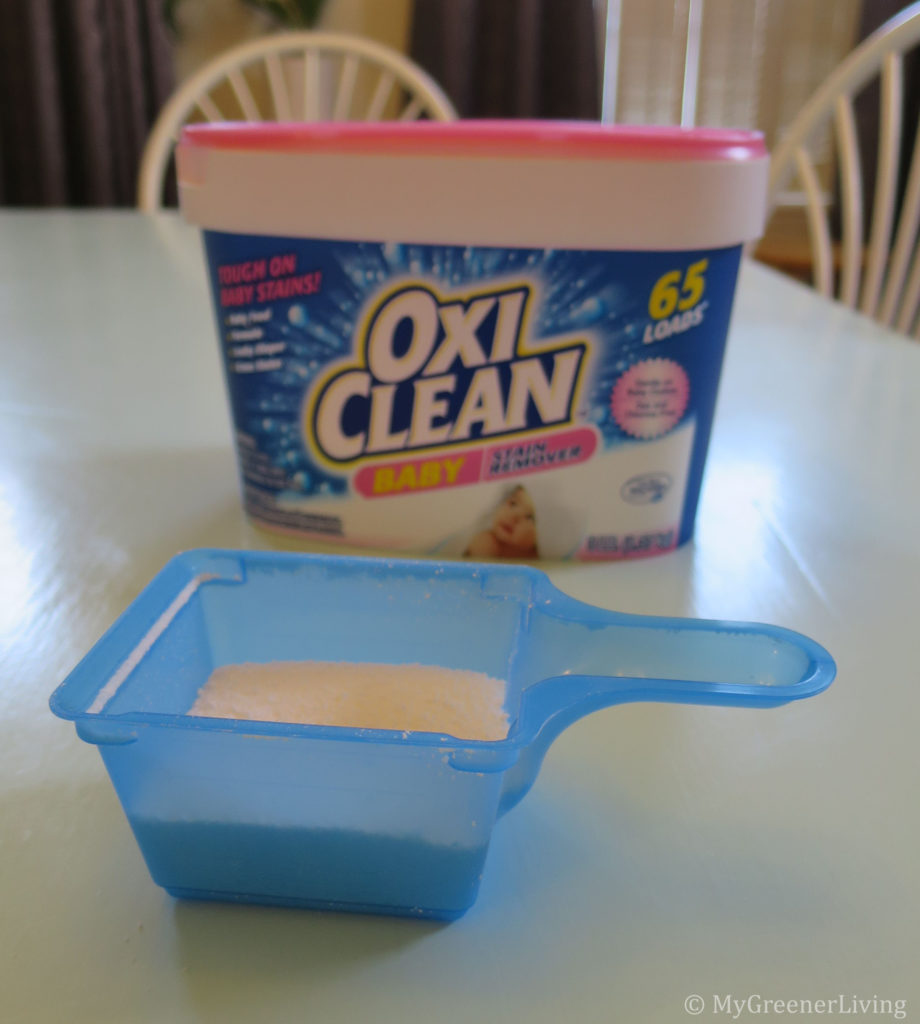
I wash my sheets almost the same way that I wash my towels .  I wash my sheets on warm cycle, with OxiClean Baby and my homemade laundry detergent

OxiClean Baby

As with towels, it’s best to soak the sheets in water with OxiClean first, but I don’t always do this.  I feel that it’s more important for towels than sheets, for me at least, because I don’t noticeably sweat when I sleep (except in really humid summer weather) so I’m not quite as concerned about microbes on sheets as I am on towels, which are always warm and moist when used.  Check out my post about washing towels for more information about OxiClean and why I choose to use OxiClean Baby. 

Since I only have 1 set of bed sheets to wash each week, I often wash my towels and sheets together to fill the washing machine.  I use OxiClean, my homemade laundry detergent, and warm water.  

I line dry sheets, then toss in the dryer on medium heat for about 5 minutes to heat-kill some micro-organisms that could still be clinging to the sheets.

If I need the sheets dry quickly, I toss them in the dryer with my awesome wool dryer balls (check out my post on those if you missed it).  I also own two sets of bed sheets, so I can make the bed with a fresh set as soon as I strip the bed to wash the dirty sheets. 

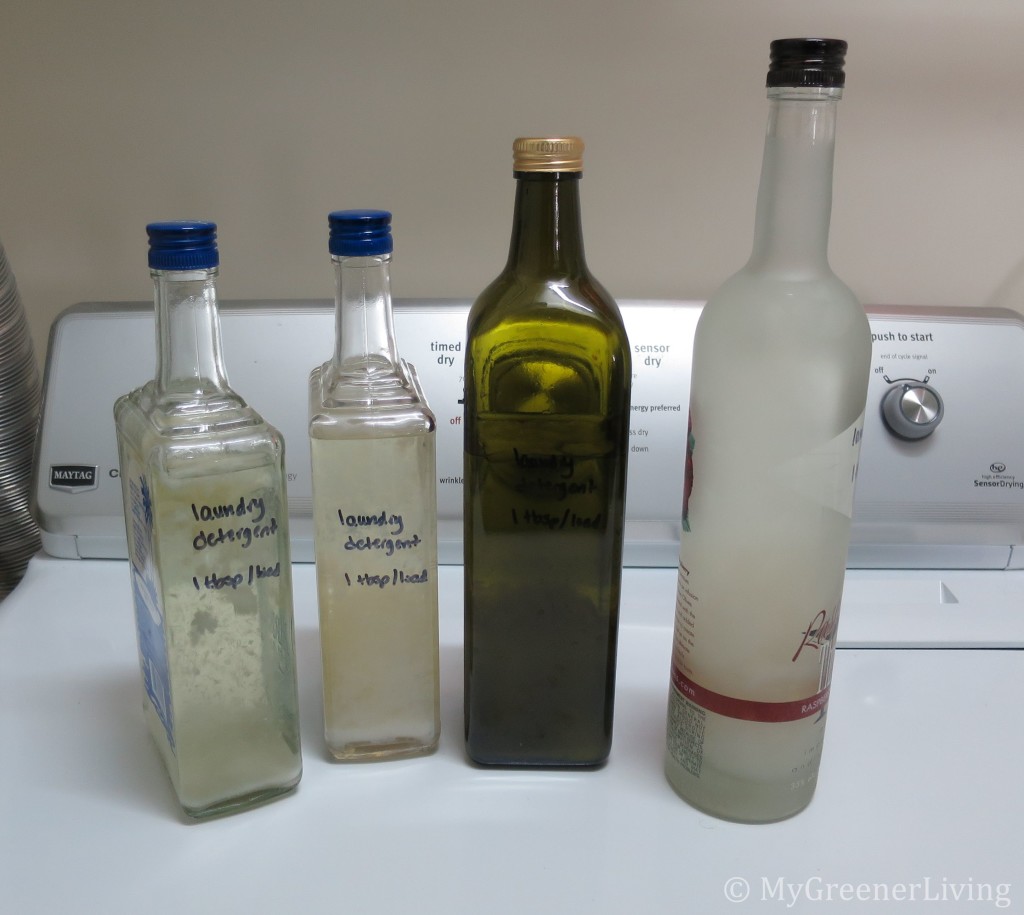
liquid laundry detergent - finished product
Castile soap based liquid laundry detergent recipe
Why don’t I use hot water and chlorine bleach?

Hot water is great at killing microscopic organisms, but it weakens fabrics and can shrink cotton.  I don’t mind this so much with towels, but I need my sheets to fit my bed!  Chlorine bleach also weakens fabric.  Additionally, it’s harsh on your body and not good to be putting in the wastewater supply.  The active ingredient in chlorine bleach, sodium hypochlorite, got an EWG rating of F on a scale of A-F with F being worst, so I avoid using chlorine bleach whenever I can. 


I am sure some of you are not very happy with me right now, recommending weekly sheet washing.  Does anyone really like the chore of washing sheets and making the bed?  I know I don’t!  Sometimes I wish I hadn’t researched something, because I would rather be blissfully naive and keep doing what I have always done.  So, don’t feel guilty if you aren’t ready to adopt this change.  Remember Jolie Cleanperson’s Sheet-Washing Scale.  And do what works for you!